

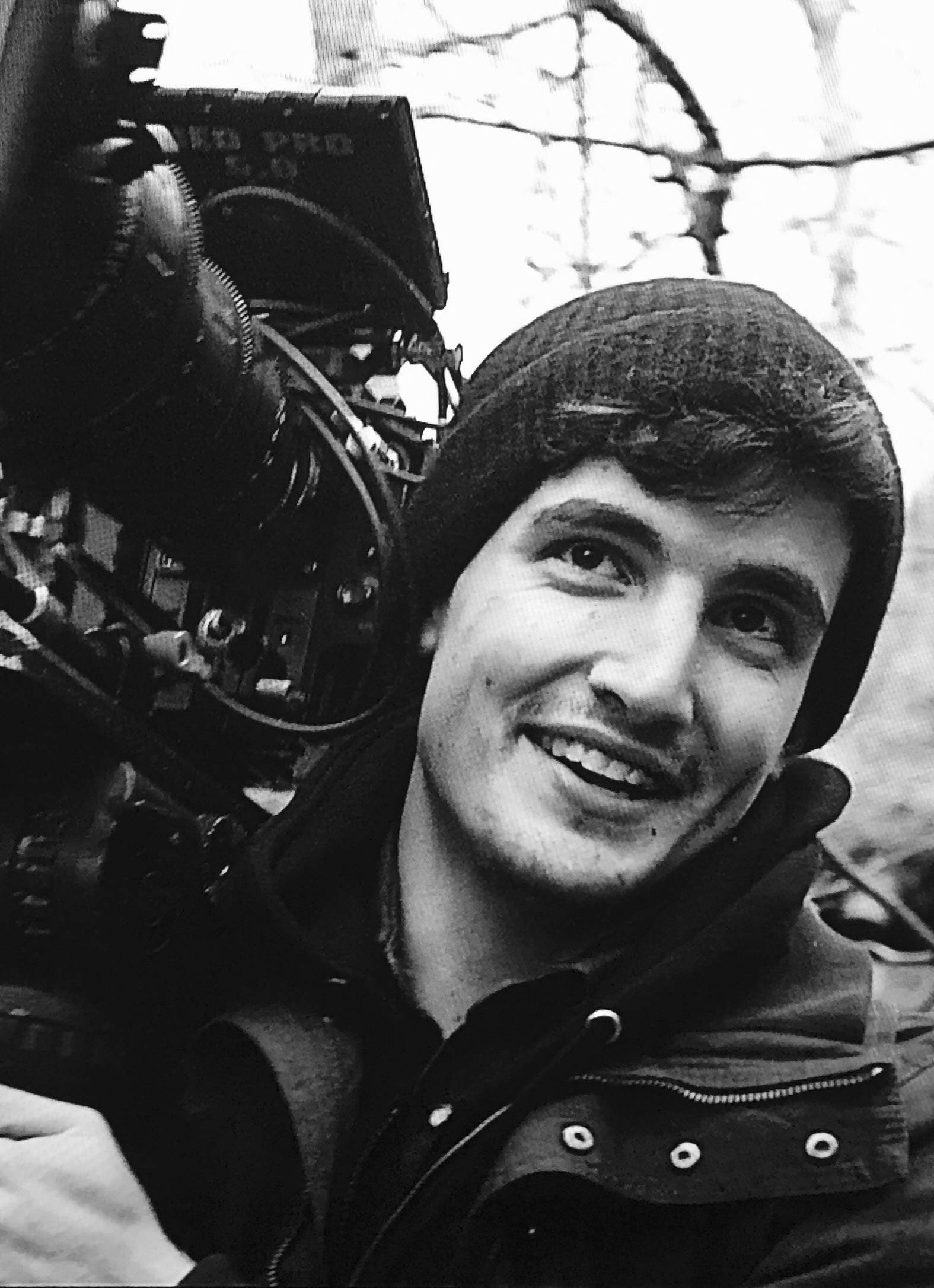
Hello to all my Wonderful World Outside Our Window Subscribers,
A few years ago I noticed that the DP for a few episodes of Marvel-616 had the exact same name as my father: David Bolen. Not long after I first discovered evidence of a Second David Bolen, Some Kind Of Heaven came out. The first of a now four film long collaboration with director Lance Oppenheim, Bolen’s work on Some Kind Of Heaven stuck out to me as particularly impressive when considered next to many contemporary documentaries.
Possessing a distinct visual style, Some Kind Of Heaven seemed to prove to a wider audience that documentaries don’t have to be the rote information dumping that defines Netflix’s cottage industry. They could be works of art on the same level as a narrative feature, and should be treated as such. Just a few weeks ago, Bolen showed his narrative chops as the DP on Primetime another Oppenheim movie. And over the weekend, his latest film, You Can See Everything—co-directed by Oppenheim and Nathan Fielder—released to ravenous praise, quickly becoming one of the buzziest documentaries of the year.
To put it simply, Bolen is working on some of the most exciting films of the year. So naturally, he sat down to talk with me. I sent him a fairly ridiculous email suggesting that our shared name meant we were destined to chat. He said yes!
(This transcript has been edited for clarity and length. I bear no relation whatsoever to David Bolen, cinematographer. Minor spoilers for You Can See Everything follow, though nothing that can’t be inferred from the trailer—the big “twist” remains hidden!)
MAX: I feel like you and Lance get way closer to your subjects than most filmmakers would, almost to the point of prioritizing emotional truth over strict objectivity. You’re the one actually looking through the viewfinder, so how does being behind the camera change your relationship to the person you’re filming?
DAVID: I like to feel things when I’m shooting. There’s a feeling you have when you’re this close to someone with the camera, versus across the room on a long lens. When I’m viscerally close with the lens, I feel things more. And the way a wider focal length reads a human face has always been more interesting and more intimate to me. It feels like you’re right beside them rather than staring at them from a distance.
Not every situation is right for that. Sometimes it’s just too much. But I think a lot of people are frightened of bringing the camera close to people. Humans might be put off by it for a minute, but the more you do it, the more they get used to it and realize it’s part of your process. So whenever I can, I do it.
MAX: Okay, this one’s about You Can See Everything, so I know you can only say so much. I read it was a pretty rushed shoot where you all sort of just showed up without knowing the details. Were you trying to pierce the facade of someone you figure is probably lying to you, or just capturing her as she is in the moment? How did you settle on the style of the film?
DAVID: I can’t speak a ton about it, but I can say it was a new approach for me and Lance. We were trying to be purely observational and let people come to their own conclusions about what was going on. It’s such a polarizing subject that I was much more interested in capturing these people in a more objective way, where the audience is making the emotional decisions and not the camera.
MAX: I read in Variety that the shoot days ran 16 hours, which sounds like a lot, by the way. When you go home, are you just passing out because you have work the next day, or are you trying to process everything you just saw?
DAVID: The more I shoot docs, the more I try to disengage. Documentaries are so emotionally grueling, and the process is so intense, that when I get back to an Airbnb or a hotel I try to think about the work as little as possible. I need that time to collapse and think about what’s going on in my own life.
MAX: You and Lance have a shorthand from working together for so long. What’s it like working with Nathan, and the whole co-director thing? Is it harder or more interesting?
DAVID: Nathan and Lance are so artistically similar, and they’re both brilliant, so the film really felt like a mind meld of all these worlds coming together into something cohesive. It was beautiful and awesome, a once-in-a-lifetime experience. Lance and I have been massive fans of Nathan for so long.
MAX: The film took a couple years to shoot, and I’m guessing you couldn’t talk about it that whole time. On a very basic level, what’s it like living with a big secret?
DAVID: You’re excited about a project and you want to talk to people about it. But the secrecy and the shock of a project are often what make it so powerful the first time you see it. I want the audience to experience it with zero idea of what it is. That’s the most exciting way to watch a movie. When I go to the movies I try not to watch trailers, and I try not to read anything, not even a Rotten Tomatoes score, because I don’t want those things informing whether I like or dislike a film.
It’s really hard, but it’s worthwhile. And when it does come out, it’s a big relief: thank goodness there are other people I can discuss this with now.
MAX: You’ve had a busy few weeks with Primetime and You Can See Everything. How’s that going? Have you been sleeping at all?
DAVID: Weird. It’s awesome to go to screenings and promote the films, but at a gut level Lance and I both just miss being on set. When a film comes out there’s almost a sadness to it, because what’s great is the process, the memories, the collaboration. It’s sad when you realize you won’t be working on this film together as a unit anymore. So we’re both squirrelly to get on to the next thing, because that’s where we’re generally happiest and least anxious and crazy.
MAX: I loved how Primetime looked. The early-2000s reality TV boom has this really specific, harsh video look that we now associate with trashy, morally panicky TV. When you’re deciding on the texture of the image, do you think it’s judging the story before anyone even talks?
DAVID: Maybe. But I don’t think Lance and I go in with that intention. We get a kick out of the film-study perspective on what we do, but if I’m being completely honest, so many decisions are aesthetic and instinctual. They’re often not intellectualized, and they’re often not even talked about. People ask me why a scene is shot in one take here versus there, and a lot of the time it’s because I ran out of time. The realities of filmmaking are so chaotic that you’re just grappling to get through the day, trusting your gut and hoping you create something special.
Sure, in the back of our minds we were probably drawn to that grittier early-2000s video look. Lance and I just like it, and we thought we could push it far. I could be pretentious and say it was all thought through, but a lot of the time it really isn’t.
MAX: This one actually came from a friend of mine, Cameron Olsen, who’s studying surrealism in documentary film, so he’s a quite interested in your work. He pointed out that you used to visualize the present with these very stylized documentaries, and now with Primetime you’re using narrative fiction to visualize the past. What challenges come with switching between the two?
DAVID: In documentary, the situations and people are real, so if you shoot it in a really heightened way, there’s something magical about that contrast: real situations shot in a strange, surreal style. Some Kind of Heaven is where we realized that dynamic really works. It’s unexplainable, but it does.
When we first started shooting Prime Time, we tried to do the same thing. But that was already mixed with a surreal story, surreal actors, and surreal sets. It was a double whammy, and all of a sudden it wasn’t working. It was too much.
So it became a process of letting go of control in a lot of ways. We still had weird lighting and crazy sets, but we dropped the control we usually have on our documentaries and got more free-flowing. When the camera felt freer and less surreal, the performances, the sets, and the period details all worked better. We’d never dealt with the artifice of actors and sets before, so we had to work through it, because our style at first wasn’t working for the film.
MAX: I heard Lance barely says “cut” on set. Does he warn you that’s happening so you’re ready, or do you just keep rolling?
DAVID: I just know Lance. What we found in documentaries is that if you hold a shot on someone long after they think something is complete, really interesting stuff happens. Often the most vulnerable moments come 20 seconds after the thing that’s supposed to happen happens. We never spoke about it, but I know never to cut with Lance, because something interesting is happening.
It works with actors too. When a camera is on them and they’ve said their lines and no one’s called cut, it gives them room to say, “Can I play around here a little? Can I try some other shit?” And I say, “Yeah, go for it. Go crazy.” Those in-between moments are often the most interesting, so we roll much earlier than we’re supposed to and cut much later.
MAX: I was looking through your IMDb and you’re the DP on a lot of Netflix documentaries, and I watch a lot of them. You and Lance make these really stylized, artistic docs, but a lot of what people actually watch is more true-crimey, almost podcast-type stuff. Do you think that’s just the way it is, or do you wish there was more room for creativity?
DAVID: I definitely wish there was more room. I’ve shot my fair share of Netflix anthology series, and I don’t want to speak poorly of them. There are some incredible ones. I work with the Way brothers, who made Wild Wild Country, one of my favorite documentary series of all time, and it’s very much in that style of interviews and archive. Beautiful things can be made there.
But I think a lot of those documentaries are made that way not because it’s right for the story but because of economics. You can make that film in 15 or 20 shoot days, versus a verité documentary that might take a hundred shoot days to get something usable. Streamers generally want stories where they can prescript exactly what’s going to happen from A to B. What excites me is a story where I don’t know where it’s going to go. You Can See Everything is a perfect example: no clue where this is going, no clue if it’ll work, but keep following the story, and maybe if we’re lucky, some special stuff happens along the way.
I have to give kudos to A24 and people like that who believe in that form of storytelling, because it’s really hard to get funding for a verité doc nowadays. A lot of the best documentary filmmakers are just starving, because there’s no economic system around it.
MAX: I read that A24 basically said if you didn’t get anything usable, you wouldn’t have to release [You Can See Everything]. That’s insane.
DAVID: Which is an amazing privilege. Not everyone gets that. Lance and Nathan have proven themselves as filmmakers, but having that freedom makes you free to fail, which is important. I think a lot of films aren’t creative right now because people are afraid of failure, because of the pressure to get X number of views or to have the algorithm accept whatever they make. You hope releases like this change how people approach documentaries, because I think documentary storytelling has become relatively stale.
MAX: I was digging through your IMDb and found something I’ve always been fascinated by: you shot the viral Deep Fake Tom Cruise 2020 concession speech. What’s it like shooting something you know is going to be faked? Are you trying to make it look good, or is it all getting edited anyway? And do you think it was a template for the more unsavory AI deepfake stuff we have now?
DAVID: I’m interested in working with interesting filmmakers, and that’s a filmmaker I think is really brilliant.1 I’ve been working with him for 15 years. He hasn’t made a feature yet, but he’s made incredible shorts.
When we made that, I had very little idea of any of it. I didn’t even know what AI was. Those ideas weren’t in our heads. It was just, whoa, look at this crazy thing, maybe if we shoot in this weird way there’s a way to morph his face to look like Tom Cruise. That was interesting to me at the time.
Now it’s kind of crazy. People are using non-actors and putting real actors’ heads on their faces, and sadly I think it takes away from the experience of watching movies and makes us question our own realities. It’s a weird time. Six years ago that idea was really exciting. The more it happens, the more you think, oh god, when will it end? But it was a fun one to work on.
MAX: That leads perfectly to my last question. Over the past decade the line between documentary and fiction has blurred, and now AI is challenging the reality of the image itself. How has your job as a cinematographer changed in this new reality, what do you feel is now your most important responsibility?
DAVID: Some people think cinematographers are technicians. To me, a cinematographer is an emotional machine. Our job is to take the feelings we’re feeling on set and project them into an image. AI has reinforced that more than ever, because if you want technical cinematography, I can go on ChatGPT right now and ask for a perfect push-in from outside a house into someone’s face, with a rainstorm, all the things that are technically challenging.
But the films I find most interesting are often very simple, with a beautiful emotional nuance to the imagery. Think of cinematographers like Bradford Young or Adam Newport-Berra. The Invite is one of the most interesting films of the year, and it’s mostly close-ups of faces, but there’s emotion in those faces and those images. AI really struggles with that. Those images never feel emotionally correct.
I listened to an interesting interview with Kane Parsons, the Backrooms director, who talked about how the richness of an image comes from looking deeper, like staring at a painting and noticing the details the creator put into the background, the color, the atmosphere. You try to interpret those details and understand why they’re interesting. With an AI image there’s no context. There might be details, but they’re meaningless, because there’s no reason for them other than that they were part of whatever algorithm created the image.
So it’s more important than ever for DPs to focus on emotionally engaging storytelling, because the technical stuff is less and less interesting to me. You could put a Marvel film into an AI machine and spit out something totally watchable and technically correct. But I’m drawn to human emotional stories, and I think only human cinematographers can do those.
Primetime and You Can See Everything are playing in theaters nationwide. Some Kind Of Heaven is streaming on Kanopy, and is available to rent from Amazon.
Signing off,
Max Bolen
Too earnestly proud of this piece to make a joke.
Filmmaker and actor Miles Fisher, who you may remember from the third season of Mad Men.
Wonderful
Wow very insightful and interesting read!