

The World Outside Our Window Presents: The Best Films of 2025
Well, like clockwork, the year is coming to an end. After catching up on some heavy-hitters over the holiday break, I’m ready to offer guidance on what was good this year. My list includes a few picks not showing up anywhere else. I think this is, frankly speaking, the only guide you’ll need. Here are the best films of 2025, unranked and unordered.
Mission: Impossible – The Final Reckoning (Christopher McQuarrie)
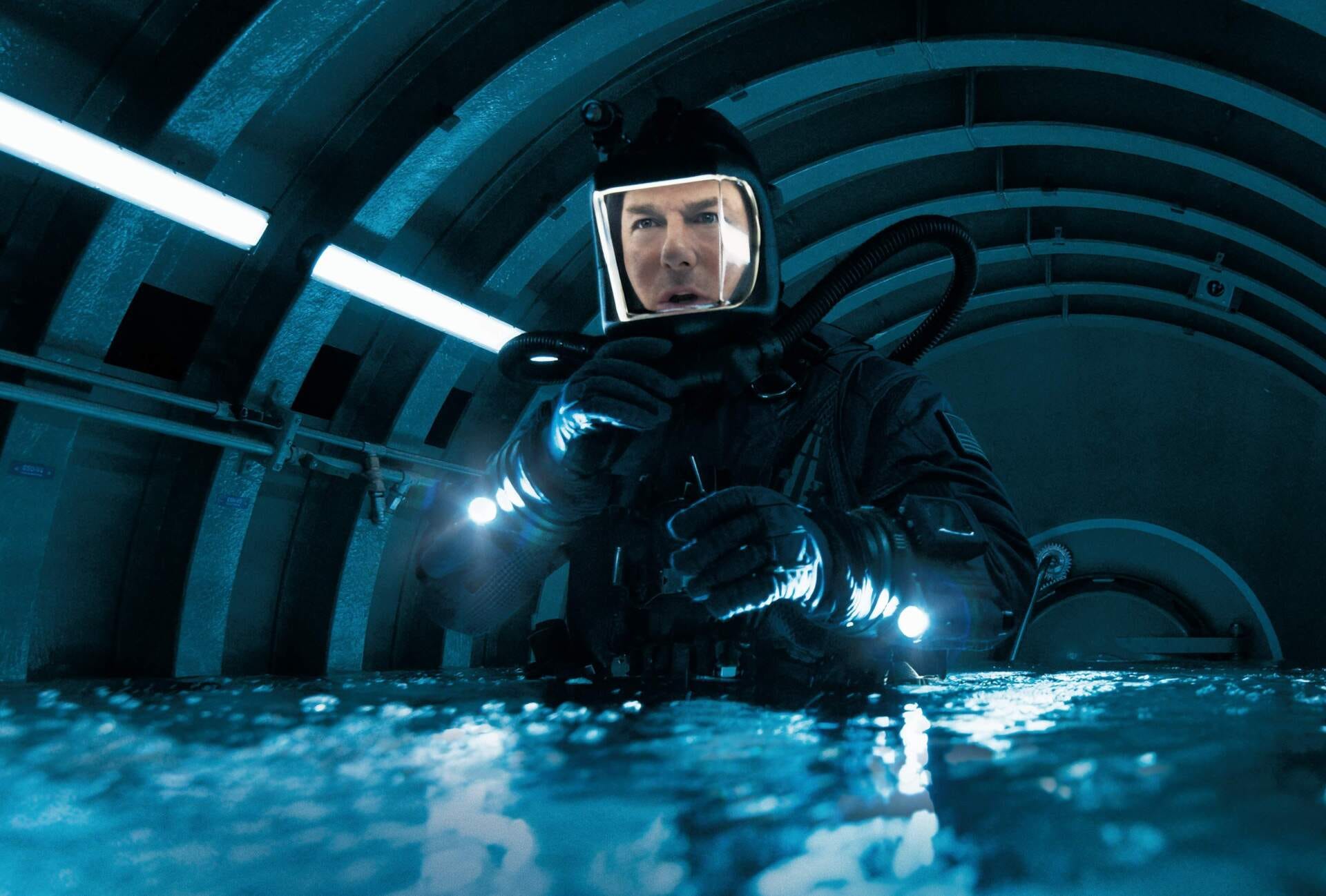
Starting off with a bit of wild card: the last entry in the Mission: Impossible series was met with critical trepidation, and not unfairly. Technically the second part to 2023’s Dead Reckoning, Christopher McQuarrie’s latest is probably his worst, stumbling under the weight of its massive obligations and clearly altered heavily once it was decided this wouldn’t explicitly be part two. But to be completely honest…I loved it despite all that, and saw it three times to boot.
Tom Cruise pushes himself to the absolute limit once again, with two breathtaking action set pieces—especially the long underwater sequence, which feels like a test for the fully underwater film Cruise and McQuarrie have been teasing for years. There’s a huge sequence that can only be described as “The Gay Submarine Where Everyone Loves Tom Cruise” which is worth the price of admission alone. Add in Tom Cruise dangling off a real plane, fascinating politics concerning America’s first Black Female President1, and an interesting meditation on what a movie star like Cruise means in the age of AI, and I’m all in.
Dracula (Radu Jude)
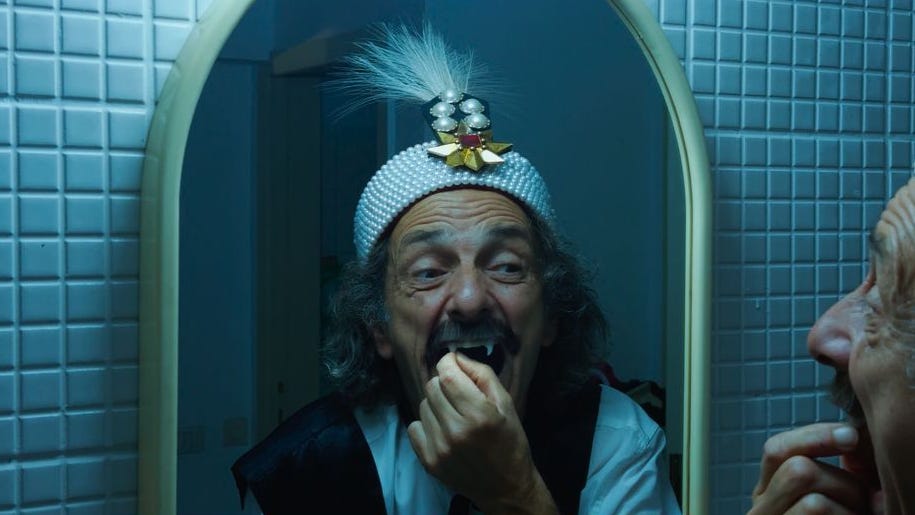
The latest from Romanian director Radu Jude, Dracula was not exactly a pleasant experience—I’d be lying if I said I wasn’t bored for long stretches, occasionally checking my phone or rolling my eyes at my friend—but I haven’t stopped thinking about it since.
Set in modern-day Transylvania, Jude reimagines the tale of Dracula through a distinctly modern, satirical lens that often feels like a punishment for showing up. With horrifically ugly AI-generated sequences, vulgar and confusing sex scenes, and long stretches that are basically just a very old man running around Romania shot on an iPhone, Dracula is not “good” in the traditional sense but instead an experiment: a look at the past and future of cinema crashing into itself as a garbled post-liberal exercise in vulgarity and flat-out trolling. I wouldn’t recommend it to everyone, but not a day has gone by when I didn’t think about this movie, and in a year where people began discussing the concept of “post-cinema” (which I’m not totally sold on), Dracula certainly makes an interesting case for what that looks like.
Also: there is a slow-mo scene that may be the funniest thing I have ever seen.
It Was Just An Accident (Jafar Panahi)
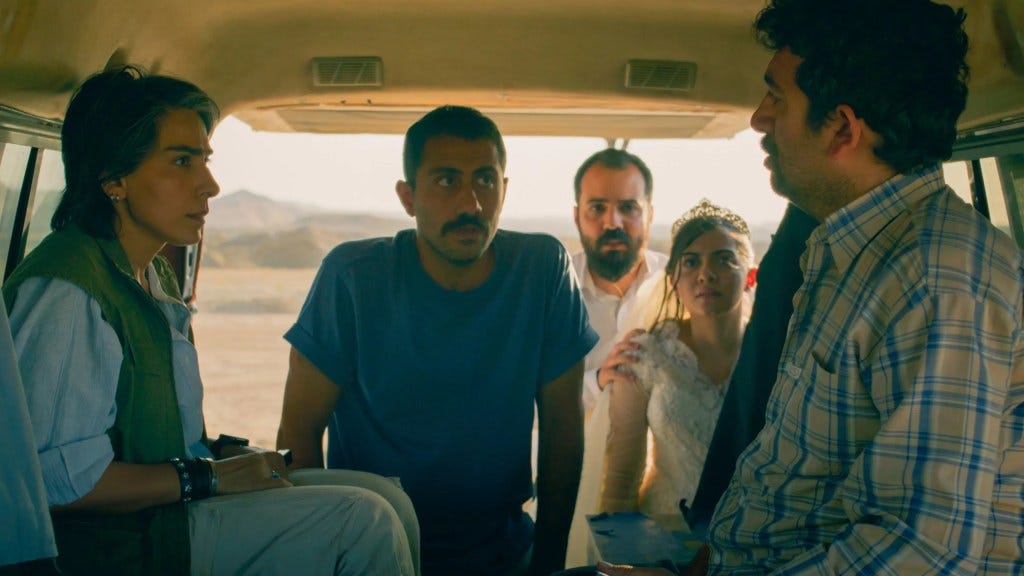
When Jafar Panahi walked on stage to present It Was Just An Accident at this year’s New York Film Festival, he told us he was worried about our country—not interested in discussing his own troubles (the Iranian director only got to the very screening I attended with a stroke of luck), Panahi instead made a film that works as both personal memoir and dark, twisted warning of things to come everywhere.
Following auto mechanic Vahid who finds and kidnaps Eghbal (defined by the distinct noise his “peg-leg” makes as he walks), the man he suspects is his former torturer, It Was Just An Accident asks us to see the humanity in everyone and question the value of revenge: should we rage against the machine or its individual operators, and does it matter either way?
Often funny—one scene where our motley protagonists must bribe a security guard who immiedtly pulls out a credit card machine is particularly memorable—Panahi depicts life under authoritarianism as oddly banal, with his characters’ quest to kill their former torturer playing out as a strange Weekend at Bernie’s redux. The empathy Panahi brings is startling, as he forces the audience to continually evaluate the worth of Peg-Leg’s life and operate in the same moral grey zone as the characters. The first movie Panahi has made as a free man in more than 15 years, It Was Just An Accident blew me away with its tightly woven plot, slowly revealing itself as the film descends further into dread and pure anger—essentially a morality play that stands out in its small moments of humanity and quiet reflection. What would you do in the face of such suffering? Who would you want to be?
No Other Choice (Park Chan-wook)
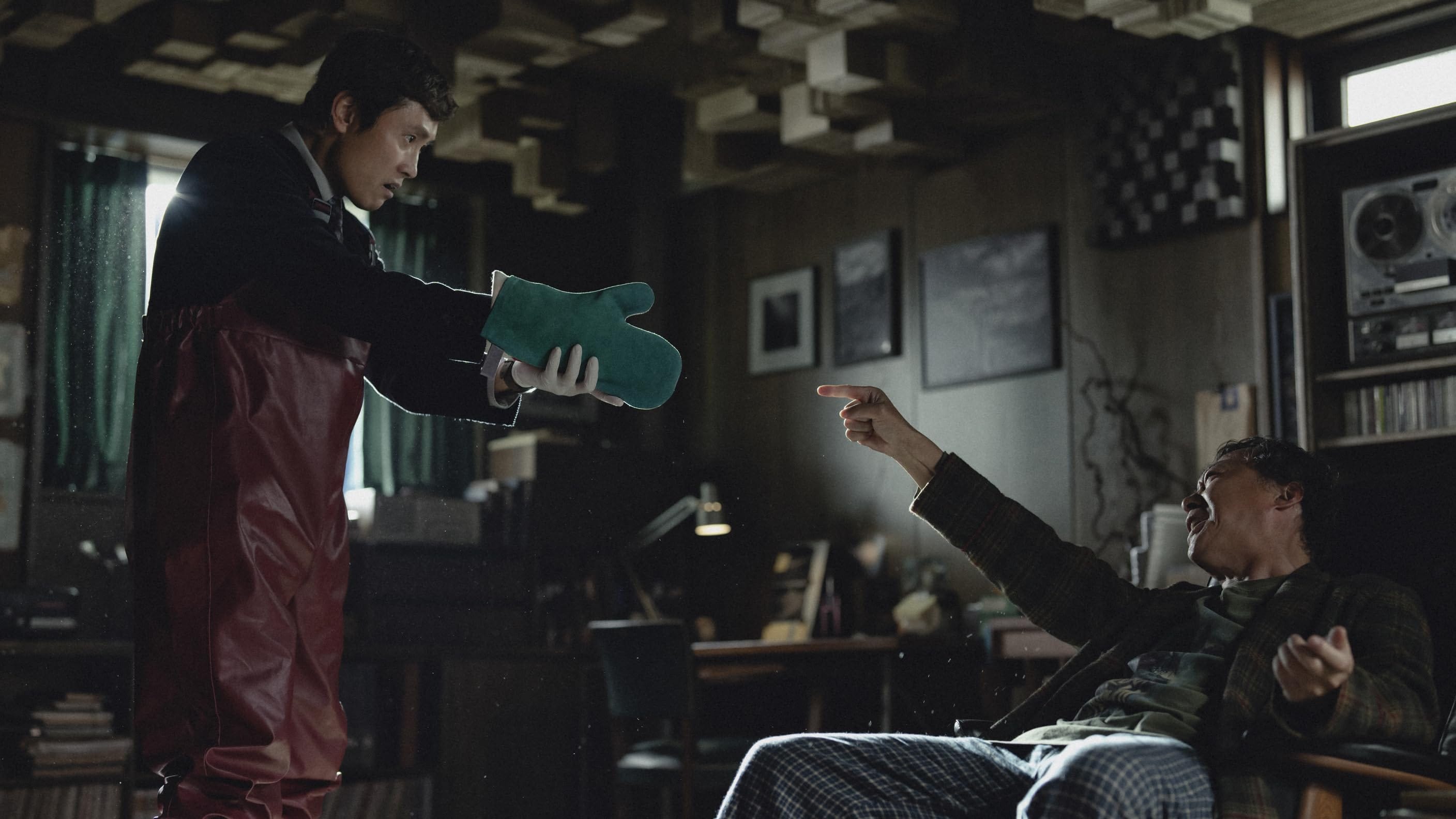
I have simply never seen a movie that looks like this before and while this is not surprising for a Park Chan-wook joint (2022’s Decision to Leave being the first movie to figure out “cellphones”), not a minute went by where I wasn’t audibly cheering under my breath because of a slight move of the camera. There is a conversation in this film shot through the reflection of an iPad!
Following newly fired paper mill worker Man-su, No Other Choice is a biting satire on late-stage capitalism that feels like one of the only truly modern films of the year. Director Park uses FaceTime as an almost cosmic curse, with our main character’s wife always calling him at the worst possible moments—mostly seconds pre-murder—but Man-su always answers, and the camera always finds a way to show us a video call in a new and exciting way. It is almost inconceivable that other people are directing films at the same time as Park Chan-wook and not even trying to match his style, his flow, his effortlessly slick transitions.
The class politics are admittedly a bit light, but Director Park understands something a lot of filmmakers are ignoring: the economic suffering of 2025 is inextricably linked to the technology that defines our day-to-day life. You cannot tell a story about an unemployed man in 2025 without showing how he hides his crimes from a wife who can FaceTime him at any moment, how he navigates a world where he’s always connected but completely alone. Most directors treat phones as an annoyance to be ignored or a lazy plot device; Park treats them as not only inescapable architecture of modern existence, but a fun excuse to try a million new visual tricks. More films would do well to move with even half of the energy in No Other Choice.
End of History (Jacob Gregor)
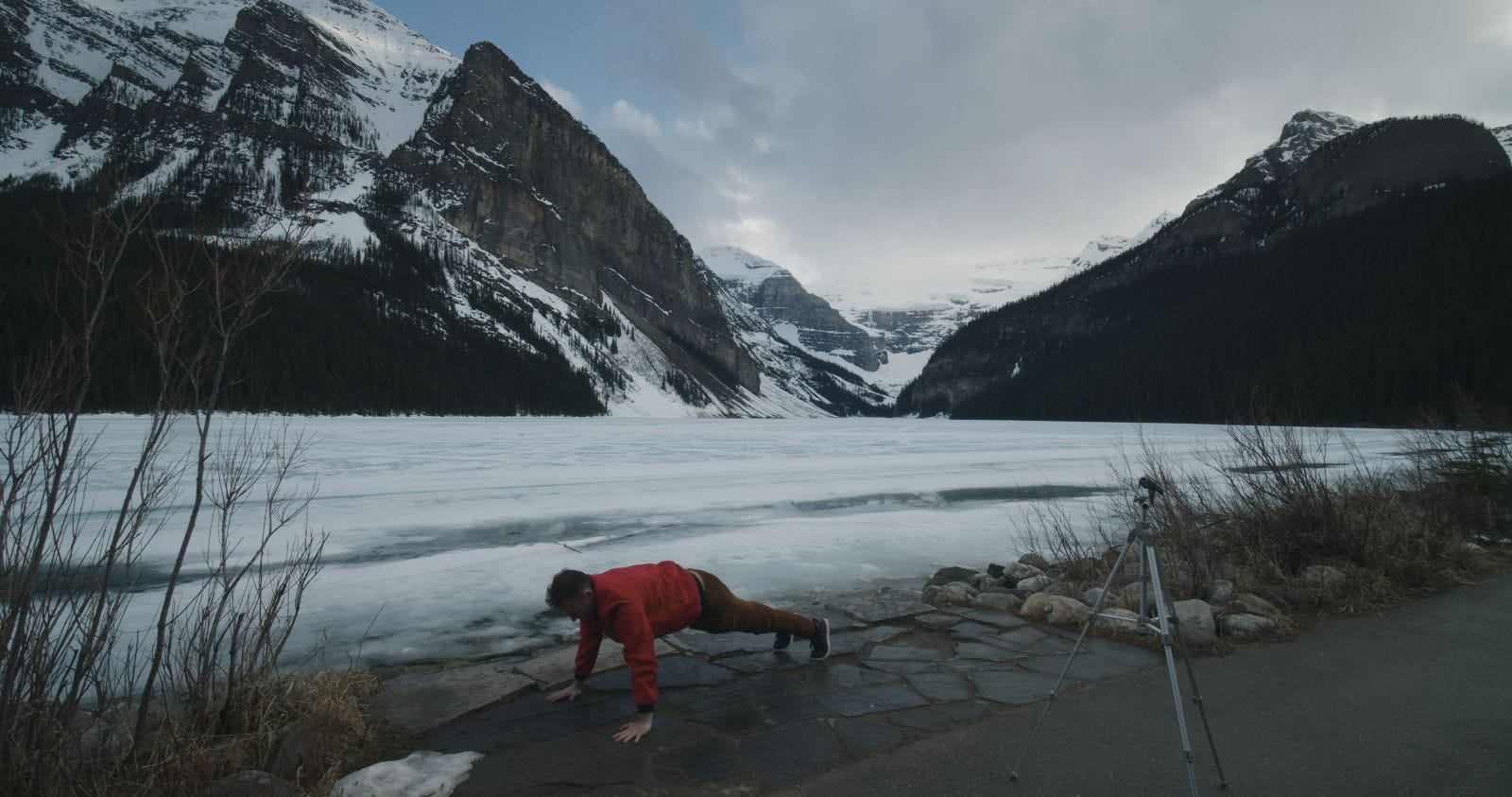
I watched End of History in a Greenpoint microcinema called Film Noir Cinema—me, my friend, and six others who I can only assume are the coolest people in New York packed the room to watch the latest from Jacob Gregor, whose last film Endless Content Forever remains one of the best films about “our present time.”
Playing like a road trip movie—albeit one with a single, silent character—End of History follows an isolated incel who goes on a journey of self-discovery to Canada. As we watch this nameless man make the drive up North, stopping only to sleep or work out (he keeps putting a “Travel Pull Up Bar” in the most bizarre places, say a very creepy tunnel, but that is of course what one does on The Grindset), Gregor plays endless podcasts, or just narrated comments on online videos, all of which are real but re-dubbed by Gregor and star Matt Calhoun—things like the internet being aflame with Property Brothers memes, comments about female videogame streamers, or manosphere podcasts about picking up girls are just a paltry sum of what is played throughout this film. Often hilarious and boring at the same time, End of History suggests that the world, in essence, has ended, and we are stuck in a purgatory of sorts—an endless suburbia that all looks the same and never changes, different states and even countries blending into a greyish blob of nothingness.
But as I sat there in that small theater (whose website has had a GoFundMe campaign to “keep them alive” for almost five years), it seemed obvious that if this is the end of history, we can escape our self-made doom if we try. End of History is not the type of movie that is getting a wide release—although I contend its humor and sensibilities are really not too inaccessible—but the director has been traveling the country all year, literally touring his film to countless small theaters, and if Dracula suggests cinema as we know it is over, then maybe End of History tells us what may be coming next. The Q&A that followed the screening was lit by one strange lamp in the middle of the room, and was an entirely awkward experience, but not in a bad way of course. The world is changing, maybe even ending, but that doesn’t mean we should just wallow in our despair. End of History is not a very hopeful film at all, but the community-oriented method of its distribution genuinely warmed my heart. I even talk to the director on Twitter now!
Magellan (Lav Diaz)

I’m embarrassed to admit that this was not only my first Lav Diaz (I have started and not finished Evolution of a Filipino Family like four times, for whatever that’s worth) but also my first proper slow-cinema experience and boy what an experience it was. I loved Magellan, and spent weeks talking to everyone in my life about it; the few people I know who have seen it (Janus is not exactly moving fast with the release) all similarly adored it, so reading all these year-end lists that didn’t include it made me feel a bit insane, but to be fair, they literally are just not playing this movie…anywhere!
As the title suggests, Diaz tells the story of Ferdinand Magellan’s (Gael García Bernal) long journey to the Philippines, and somehow, literally every shot in this movie feels ripped from a 16th-century tapestry. I have no idea how he captured nature in this way: beautiful, but also bloody and evil. This is not Hollywood’s Magellan, and Bernal’s performance is a breathtaking depiction of casual cruelty as Magellan carelessly punishes his crew and brutally murders the indigenous people, only expressing anguish or exhaustion with the long journey and his wife’s absence. Time falls away as we watch these majestic wide shots of the ocean, the sound an unbelievable mix of wind, crashing waves, and haunting silence, and while only a timid 2 hours and 40 minutes, Magellan flies by, subtly sneaking a fairly compelling and conventional narrative into the broader vibe of slow cinema.
I need to see this film again, as soon as possible, and I really think everyone should—it is a monumental achievement, and feels accessible to even the most impatient of moviegoers. The full nine-hour cut cannot come soon enough, assuming it ever comes.
Cover-Up (Laura Poitras and Mark Obenhaus)
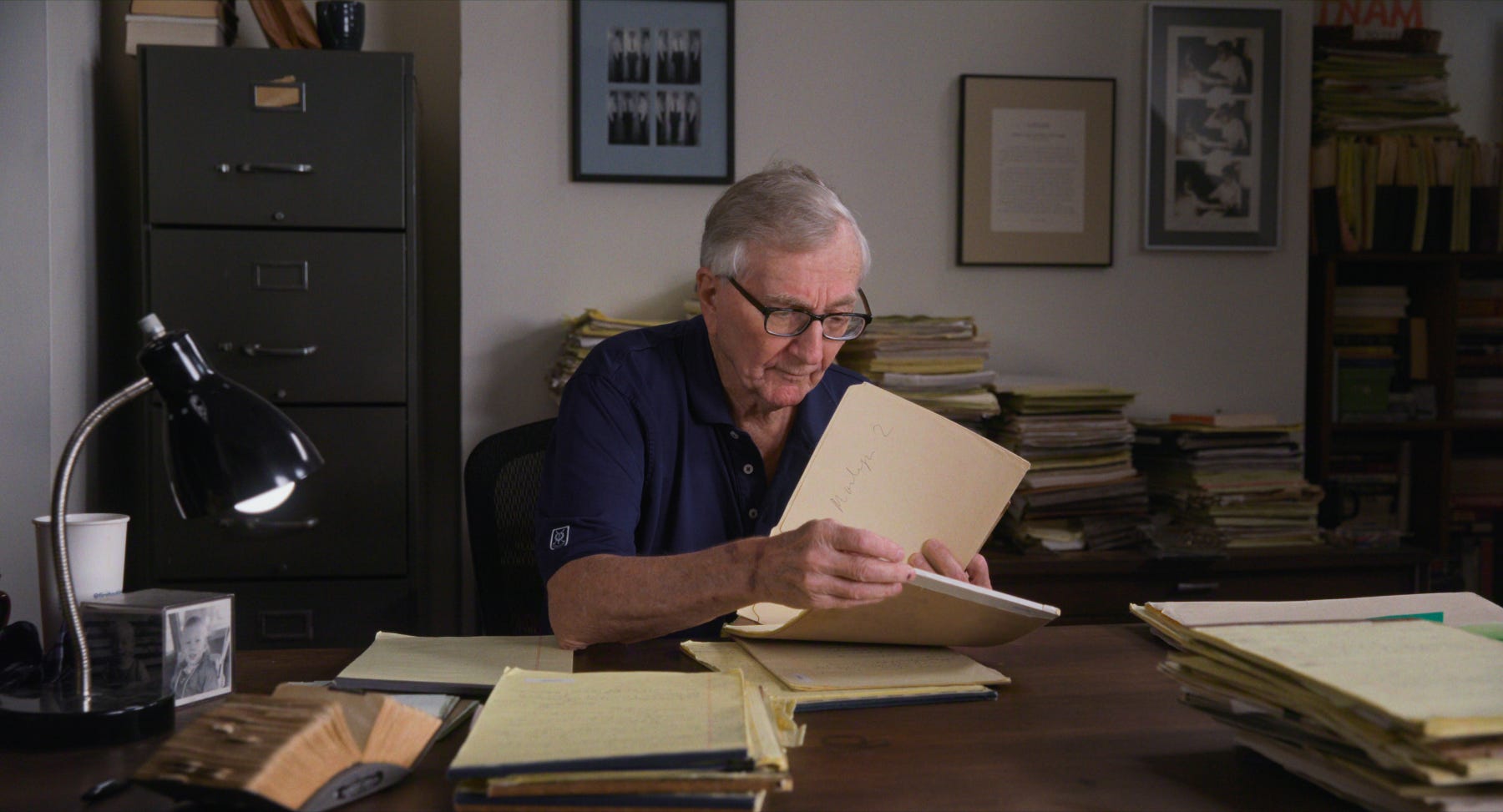
I know I said this list was unranked, but Cover-Up was the best film I saw this year. I am a longtime fan of Laura Poitras—Citizenfour was almost annoyingly influential on me—and Cover-Up is far and away her best work yet. Obviously a documentary about investigative journalist Seymour Hersh, Poitras’ film is far from a simple biographical account of his life but instead functions as a critical lookback on the past 50-odd years of American history, drawing a line between the My Lai Massacre, the war in Iraq, and the genocide in Gaza to link the historic and present cruelty of the American Empire with the decline of our media institutions, painting a picture of a government and media class working in tandem to uphold our status quo.
As we watch Hersh tell the story of his life—in an office that feels like it had to be set dressing, covered with old papers and notebooks, bursting to the brim with a lifetime of work (how is this a real man and not a movie character?)—he shows us just how close all of his revelations came to never getting out. Hersh’s tell-it-like-it-is attitude gives the film some funny moments, but also helps to make it clear how he does what he does: at multiple points he suggests he will quit making the film, constantly expressing both anger and shock at how much the filmmakers seem to know, and fiercely protective of his sources, Hersh resents the attempt to psychoanalyze him or them—he wants the truth, and will talk to anyone willing to give it to him. Take his recent scoop in 2022 that the United States had blown up the Nordstream Pipeline: ridiculed by the Biden Administration and doubted by the larger media class, Hersh says he stuck to his story for a simple reason—the source had not been wrong yet. The film prods him a bit: what would it mean if he was wrong? Not possible, he says, how could it be? Of course, since being elected, Trump has all but confirmed the US did it.
What really struck me about this doc was its refusal to ever commit the sins it exposes—not once is Hersh allowed to make a claim without prodding, with one standout moment where he cops to wrongly saying Bashar al-Assad was innocent of war crimes, namely using sarin gas. Did he get too close to power in that instance, Poitras asks; of course, he says, anyone can. It’s this push-pull between truth and power that seems to have defined Hersh’s, and by extension all Americans’, life, and while he mainly focused on our foreign atrocities, one need not work hard to connect that tension to our present domestic issues.
While the film may often play out as a conventional documentary, I think that its ability to deftly weave all these somewhat disparate strands into a powerful indictment of not just American foreign policy, but the American press, and in many cases the American people, shows the work of a brave and unrelenting documentarian committed, like Hersh, to getting to the meat of the story, no matter who she pisses off.
Cover-Up just recently released on Netflix, and of all the films on the list, this is the one I think everyone should watch immediately. Plus, as a final aside, this is probably a better portrait of the mid-century American Jew than Marty Supreme (which is conspicuously absent from this list…).
Signing off,
Max Bolen
The last movie I watched this year was Norbit (Brian Robbins, 2007)
P.S.: For more end-of-year favorites, look at my entry in The Ministry of Pop Culture’s list of the 25 best Pop Culture moments this year. I wrote about Donkey Kong, but you should read the whole list, it has some of the best writers on this platform.

Cruise, ever a lib despite what the haters say, clearly foresaw a different outcome when he filmed this movie in 2021. In fact, a LOT of film and TV in 2025 had Presidents that seem eerily similar to Kamala Harris, with many literally being seen as replacing an older white man. Keep a look out for an essay about that!
So is Norbit on the 2026 list or…
i have seen zero of these movies, so you know they're good