

Hello to all my Wonderful World Outside Our Window Subscribers,
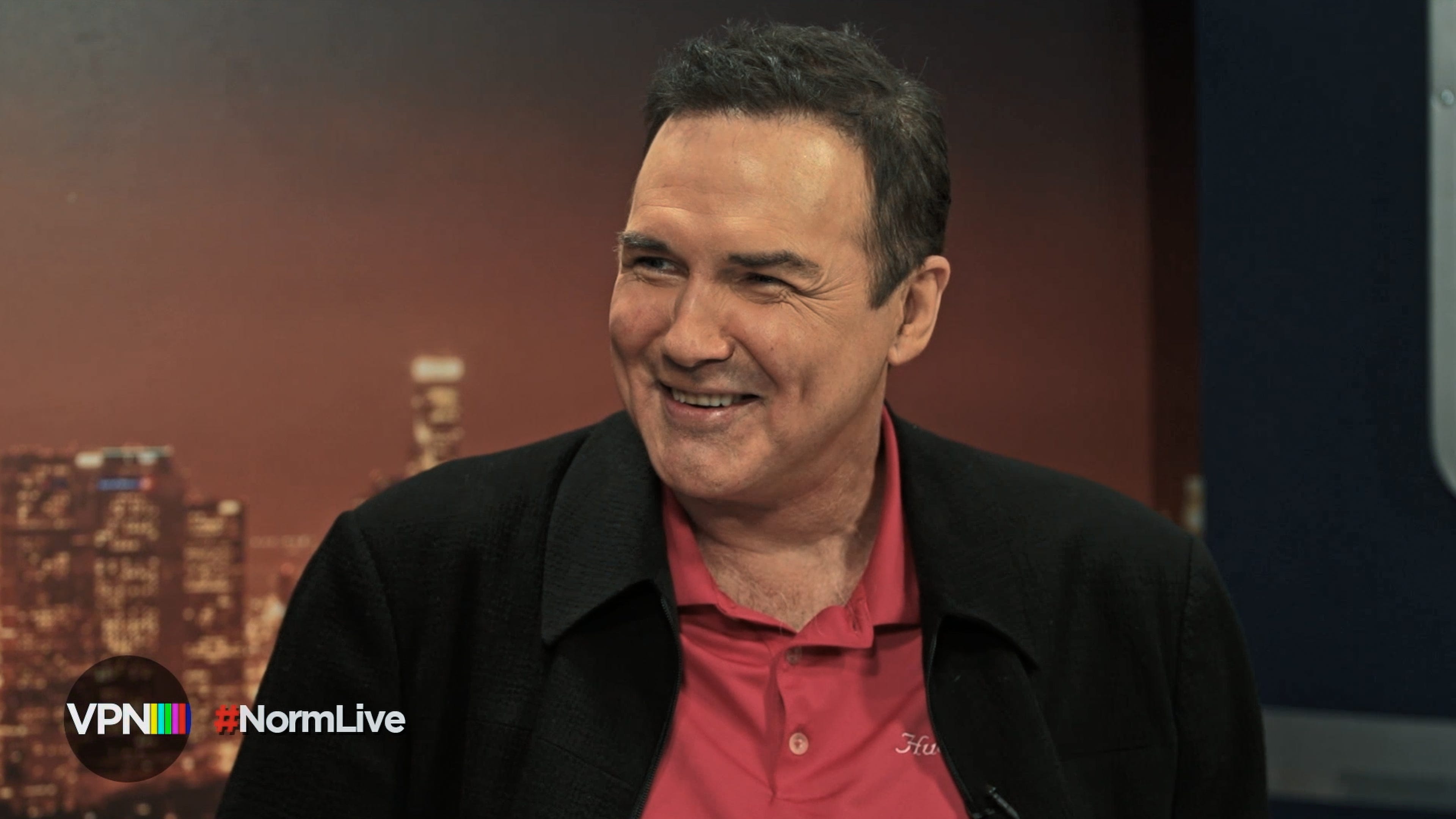
“It’s not facts, but it’s truth.” That’s what Norm Macdonald told Larry King a little over a decade ago while pushing his book Based on a True Story: Not A Memoir. King, as confused as ever, tried to force Norm into a box: is it a novel or a memoir? A story or a confession? Little did Larry know that Norm had spent his entire career attempting to prove there’s zero difference between the two. Since his death in 2021, Macdonald’s relentless commitment to lying, misdirection, and general high-wire bullshit has made it all but impossible to understand the guy behind some of the greatest jokes ever told. But in Judd Apatow’s new documentary, Norm: The Tale of Norm Macdonald, Apatow tries something surprisingly weird with the celebrity-tribute format, and somehow gets us closer to a man who has never felt further away.
Skipping the talking-head interviews that frequently dominate celebrity docs, Apatow’s latest is composed entirely of archival footage, with the only narration or expositional dialogue coming from already-recorded clips of Norm, or more often, excerpts from the audiobook version of his novel. The average Norm fan really only knew his work through various—and quite disparate—clips of him on talk shows, podcasts, and Weekend Update. Apatow’s effort here is to organize them as a fan himself. The film frequently uses a YouTube search bar to transition from clip to clip, mimicking the very rabbit hole that defined much of Macdonald’s fandom. While other people beyond archival Norm speak to provide insight on his life, it is still strictly within the context of podcasts, featuring the likes of Shane Gillis, Theo Von, and others of that ilk.1
While I appreciated the novelty, it did initially feel like a lazy choice. Apatow is friends with just about every comedian still living, and it seemed odd to produce a film that anyone with Premiere Pro and a large hard drive could make in their basement. There is very little new or shocking information in Apatow’s doc, except for the reveal that Macdonald was a deeply closeted gay man. However, what initially felt like a shortcut soon reveals a careful, deliberate rhythm. The clips are arranged exceptionally well, mimicking the hypnotic pull of a YouTube spiral while succinctly telling Norm’s story in a relatively sensible order. There are even moments, as critic Will Sloan writes, where Apatow goes “the extra mile and arranges them artfully.” This ranges from the amazing decision to start the film with Norm brutally making fun of Steve Irwin’s death, to the inspired choice to back up claims that Norm never went to high school by showing a clip of him pretending he did not know how to pronounce the word “iron.” Seconds later, a newspaper clipping reveals he did in fact go to high school—and graduated at only 14 years old.
It wasn’t until the film got oddly dark that I fully realized what Apatow was actually pulling off. If you didn’t already know, Norm was a bit of a disturbed guy. His compulsion to say whatever he wanted gave us some of the best moments in television history, but that same pathological need to blow things up also gave him a wildly uneven career. You can hear it in his own narration from those late-era podcast clips, Norm clearly didn’t plan on ending up in such a rinky-dink format and never quite felt satisfied with his life. We all knew he had anxiety and depression (he was a stand-up, after all), but the way Apatow stitches this footage together reveals a guy who was hurting a lot more than he let on. There are these quick flashes where the grinning mask drops and the audience sees the incredibly vulnerable man underneath. At one point, Apatow takes this goofy clip of Norm laughing and loops it over and over. It starts out feeling like a cheap, juvenile joke, but by the tenth loop, it mutates into this terrifying snapshot of a guy who was always tipping over the edge.
Slowly, it dawned on me that Apatow actually has something of a central thesis: Norm was just fundamentally unknowable, an absolute enigma to everyone in his life. Early on, a montage of Norm lying about his childhood plays like a great bit. But by the end, when you see him quietly dying of cancer, totally isolated, those same jokes start to feel pretty haunting. In one brutal bit of audience manipulation, Apatow plays a bunch of genuinely hilarious clips of Norm eating huge amounts of food and gaining weight, only to quietly imply that the weight gain was actually from chemotherapy. We were laughing at the completely wrong thing. The documentary asks us to reconsider the context-less clips that defined our own fandom of Norm, while admitting that they may still be the most accurate picture of him we have.
On one hand, it is tempting to view Apatow’s refusal to shoot new interviews as a missed opportunity, or a shortcut that allows him to declare Norm “unknowable” simply because he didn’t bother talking to anyone who actually knew him. Perhaps a conversation with his son would clear up all the confusion. But at the same time, wouldn’t demanding traditional, teary-eyed interviews from Norm’s friends actually be a betrayal of the film’s subject? To drag comedians in front of a camera to (likely poorly) psychoanalyze Norm would violate the very boundaries he spent his entire life maintaining. Apatow’s intentionally limited use of archival footage instead helps to honor the illusion Norm himself created.
The most talked-about films this year are ones that force us to confront what we know, and why we think we know it. Though it will not receive quite as much prestigious coverage as a few other films, Norm undeniably fits in this milieu. Ultimately, discovering the “real” Norm Macdonald would ruin the joke: all we really need to know is that Norm was the funniest guy in every room, and despite appearances, he always held all the cards.
Signing off,
Max Bolen
Has cried at exactly two celebrity deaths: Norm Macdonald and Jean Luc-Godard.
Norm: The Tale of Norm Macdonald is streaming on Netflix.
Whilst I acknowledge that Norm almost assuredly shared their politics he was both funny and smart so. It’s different. Trust me.
Well I thought he served a youthful porpoise
Yess, Norm Supremacy